


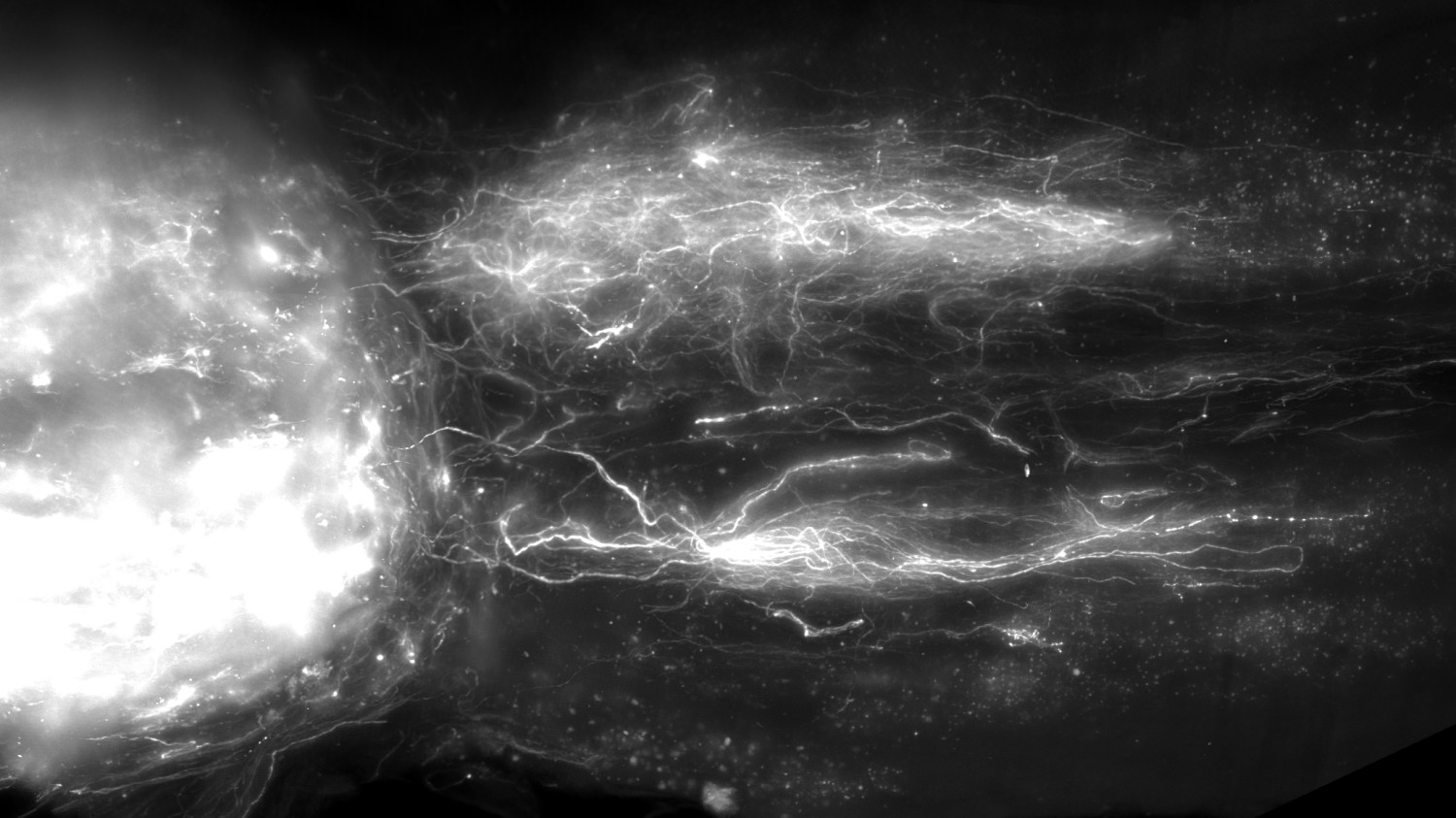
The realm of spinal cord injury has always presented a profound medical challenge. While partial spinal cord damage can show spontaneous recovery in motor functions, a complete injury usually leads to irreversible paralysis. However, a breakthrough study might be a game-changer in this field.
Understanding the Complexity of Spinal Cord Injuries When the spinal cord is injured, it can react differently based on the extent of the damage. Surprisingly, with partial injuries, there is a notable spontaneous repair mechanism. But a full injury, unfortunately, stops this healing process, leaving the affected individual without recovery options.
Pioneering Breakthrough in Nerve Regeneration Mark Anderson, a leading figure in CNS Regeneration and affiliated with .NeuroRestore and the Wyss Center for Bio and Neuroengineering, sheds light on a critical discovery. He recalls, “We’ve proven nerve fibers can regenerate across complete spinal cord injuries, but the challenge was ensuring these fibers connected accurately post-regeneration.”
Harnessing Advanced Technology for Deeper Insights Collaborating with experts from UCLA and Harvard Medical School, the team used EPFL’s Campus Biotech’s state-of-the-art facilities. Jordan Squair, the study’s principal author, emphasized, “With single-cell nuclear RNA sequencing, we identified the specific axons vital for regeneration and realized their connections must be precise to restore motor function.” Their revolutionary findings are now published in the esteemed Science journal.
Designing a Novel Gene Therapy Based on these insights, the researchers crafted a multi-faceted gene therapy approach. They activated growth programs in the critical neurons in mice, enhanced certain proteins to foster neuron growth through the injury, and introduced guiding molecules ensuring the nerve fibers connected correctly.”Our design was nature-inspired. We tried to emulate the natural repair processes seen in partial injuries,” Squair remarks.
Promising Results and the Path Forward Post-therapy, mice with full spinal cord injuries displayed the ability to walk again. The walking patterns observed closely matched those of mice recovering from partial injuries.Grégoire Courtine, another senior author, believes in the dual power of their gene therapy coupled with spinal stimulation. He says, “Both are essential – regrowing nerve fibers through gene therapy and optimizing movement via spinal stimulation.”The journey to translating this discovery for human application still has hurdles. But, the team remains optimistic about the possibilities and continues to advance the necessary technologies.
In this groundbreaking study, hope shines for those with spinal cord injuries. While the path may be long and winding, the first steps towards revolutionary recovery techniques are here.